Cognitive Orgies
★ Cognitive Orgies I
Aura.
Our project explores how biological rhythms can become part of domestic infrastructure, rather than something measured, optimized, or hidden. Coming from different research backgrounds — macrobiotic therapy and symbiotic organs, biometric data and AI, and speculative thinking on future domestic infrastructures — we were interested in how care, regulation, and meaning might be re-embedded in intimate, embodied systems. We began by asking how internal physiological processes, such as a heartbeat, could be externalized in a way that feels relational rather than extractive. Instead of treating biometric data as something to be quantified or controlled, we wanted to translate it into a form that is perceivable, atmospheric, and emotionally legible.
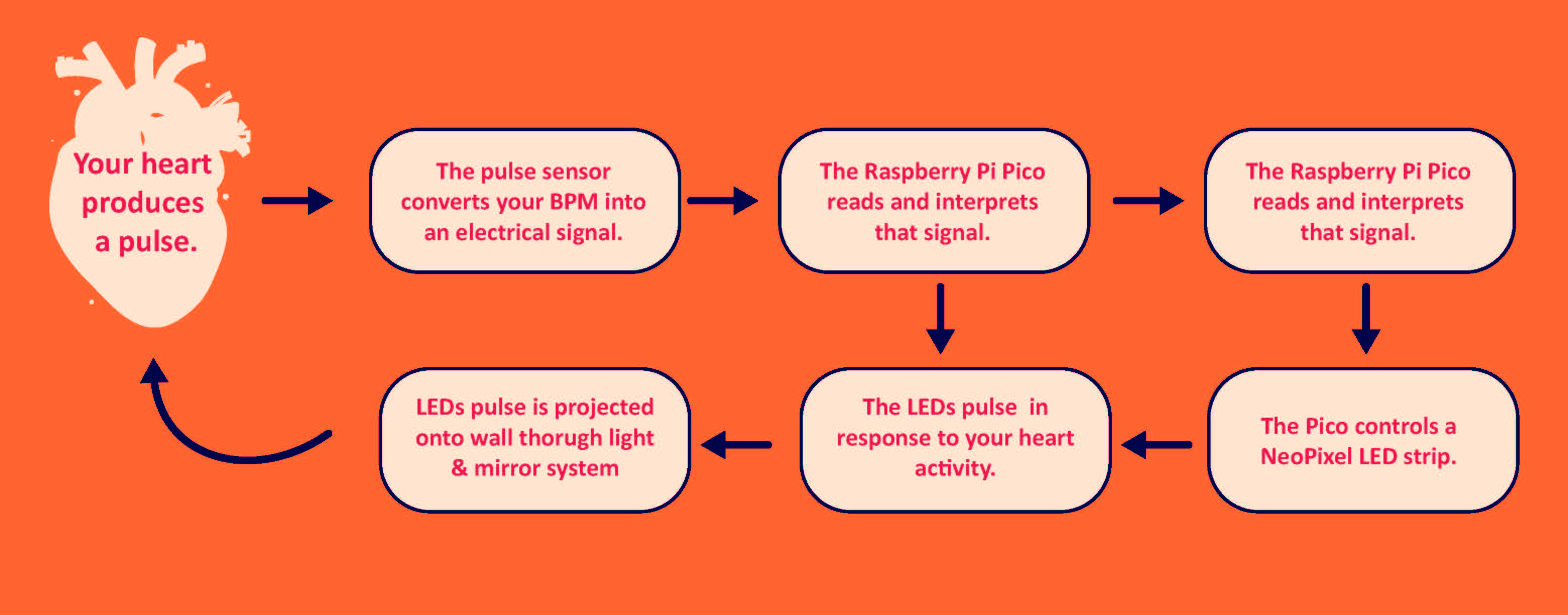
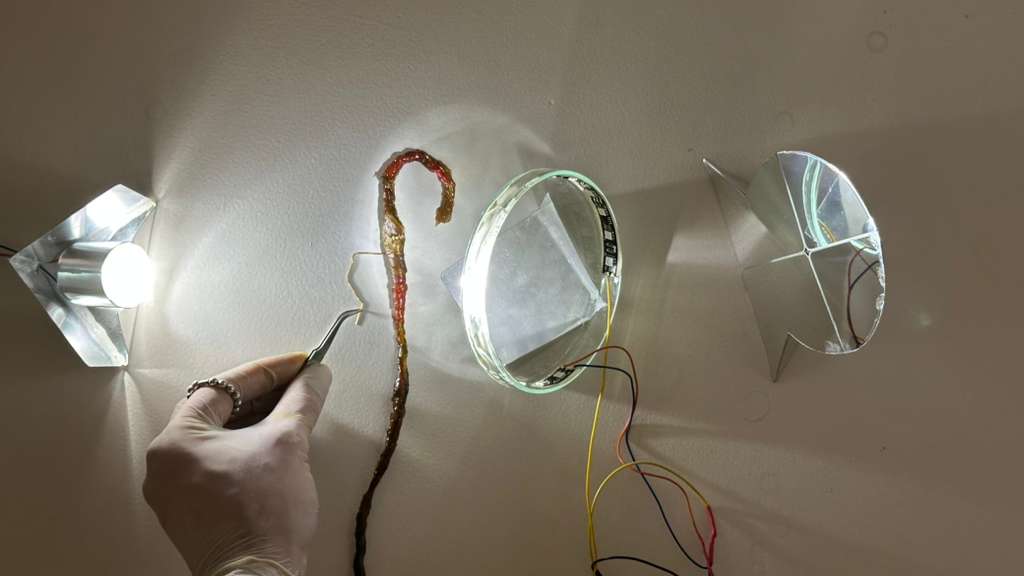
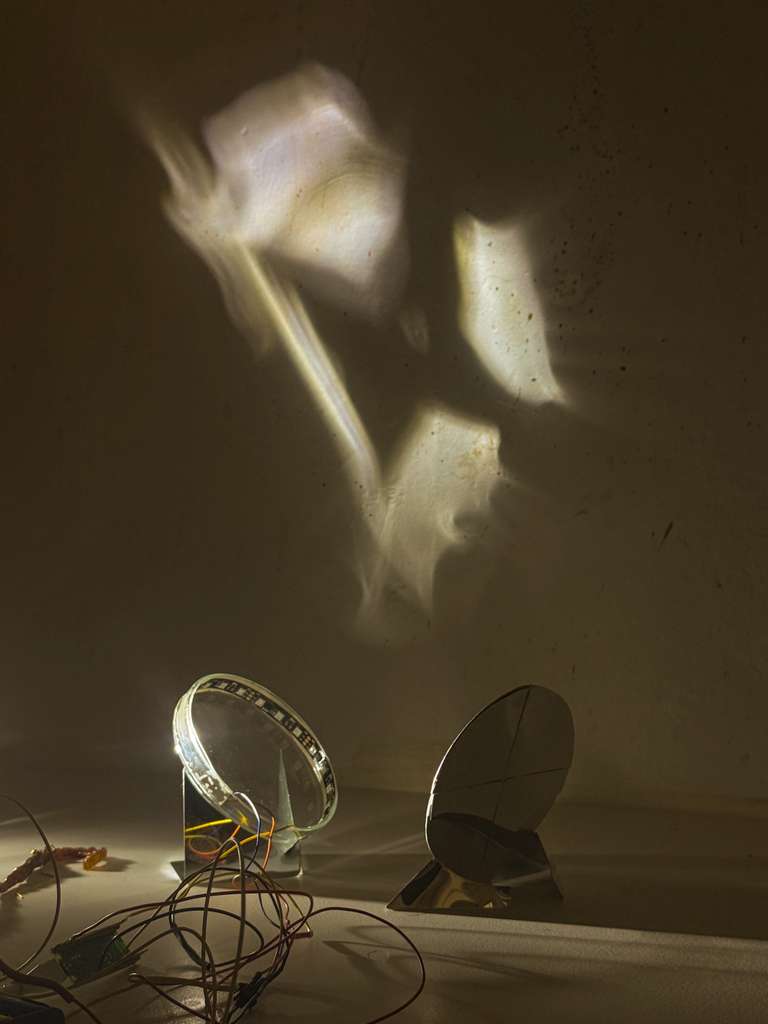
The project takes the form of a wearable, organ-like earpiece that senses the wearer’s pulse and translates this biometric data into light. The heartbeat is captured through a pulse sensor, interpreted locally using AI-supported logic, and expressed as a rhythmic light pattern. Rather than visualizing data numerically, the system renders bodily rhythm as light, allowing internal states to modulate atmosphere instead of appearing on screens. Materially, the electronics are embedded in biotic skin made from bacterial cellulose. This living material situates the device between organism and artefact, introducing time, care, and fragility into the system. The earpiece functions as a soft, symbiotic organ — neither fully internal nor external — that extends the body into its surroundings. Together, light, biometric data, AI interpretation, and biotic material form a distributed, embodied infrastructure. The project proposes an alternative vision of domestic systems: not centralized, invisible, or automated, but intimate, responsive, and grounded in biological rhythms. In this way, the work brings our different research perspectives into a single speculative artefact that explores how future infrastructures of care might operate through attunement rather than control.
Personal Reflection of Week 1.
Cognitive Traces.
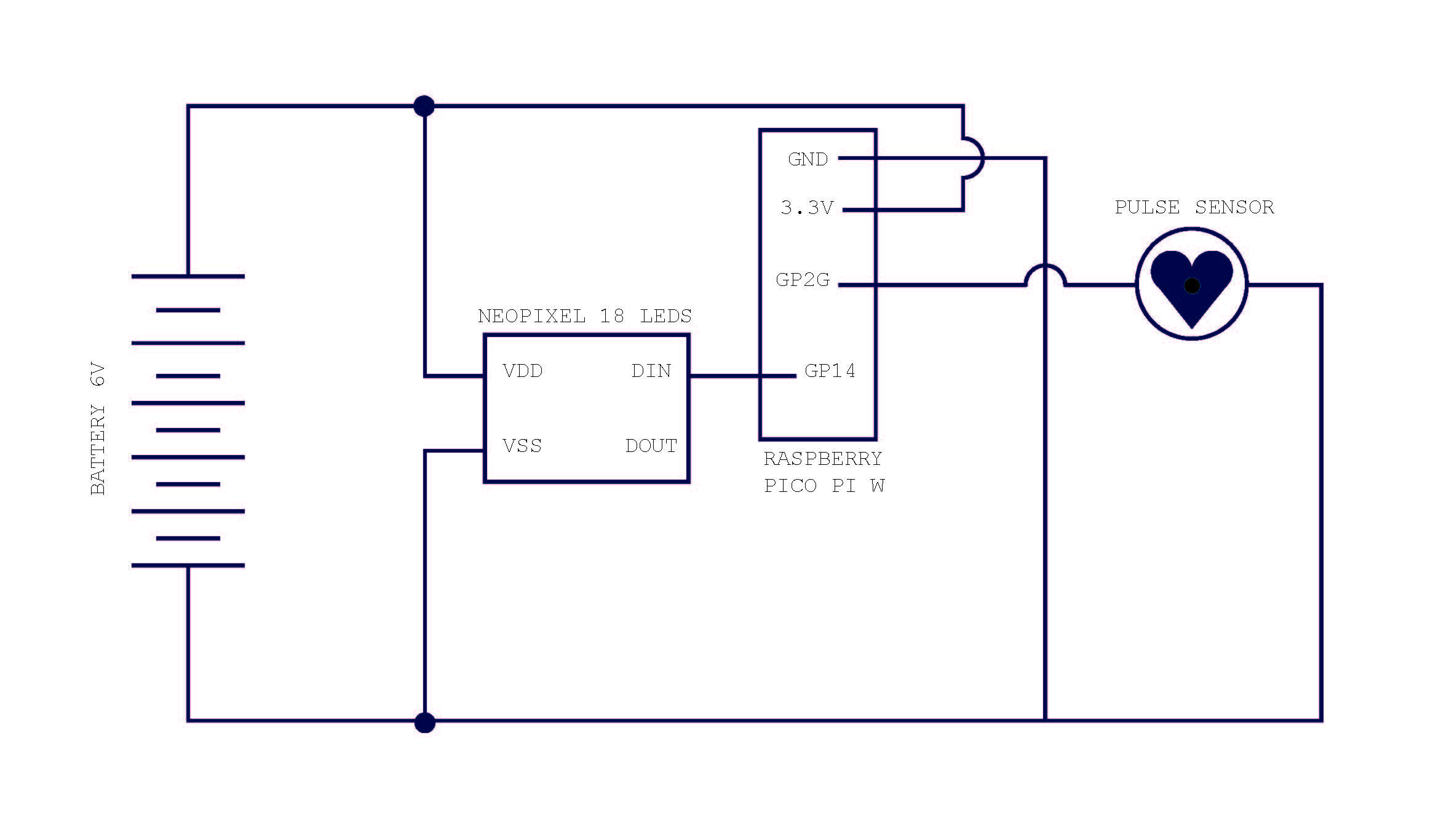
A key moment where our thinking shifted occurred when the heart rate sensor was functioning, the solenoid was close to working, and the overall system design was coming together. At this stage we realized that the electromagnetic fields generated by the solenoid were not going to produce the visual outcome we had originally imagined. Even if the solenoid functioned correctly, it would not create the magnetic image we envisioned on the petri dish. With more time or different resources this might have been possible, but in that moment it became clear that the technical success of the system did not guarantee the conceptual result we were aiming for. As a result we decided to move away from the solenoid and Raspberry Pi Pico setup and instead translate the pulse sensor data through an LED light strip.
Moral Traces.
The distribution of work within the group functioned well throughout the week. Each of us took on tasks that challenged us while also leaning into our existing skills. There were many learning curves and failures, but the group remained supportive during difficult moments. At the same time we allowed each other the space to struggle, learn independently, and gradually progress. This balance between collaboration and individual problem solving strengthened the overall working dynamic.
Technical Process Traces.
During the previous week of the Extended Intelligences course we worked with the OpenAI Agent Builder, which strongly influenced our desire to incorporate agents into this project. I was particularly interested in this direction, and as a group we wanted to connect a Raspberry Pi Pico sensor to an MCP and link it to an OpenAI agent. However, creating MCPs from a physical sensor and successfully connecting them to an agent proved far more difficult without direct guidance from the professors who taught the Extended Intelligences course. We spent many hours attempting to resolve these issues, but complications with IAAC WiFi and Cloudflare prevented us from fully implementing the system. Although this was frustrating, we ultimately had to accept the limitation due to time constraints.
Technical Process Traces.
In the end, I feel that we made several compromises that caused us to drift away from the project’s original intention. However, this process was an important learning experience. Despite the challenges, we accomplished a significant amount and gained valuable technical and conceptual insight. In hindsight, starting with a smaller and more focused scope would have allowed us to build up complexity gradually rather than beginning with an ambitious system that ultimately had to be simplified.
Diagrams.